
Edmonton
Physiotherapy
Our Edmonton physiotherapists treat the root cause of your pain—from lower back stiffness and sciatica to shoulder pain, tendonitis, rotator cuff or workplace injuries. Our physio treatments aren’t “textbook” because sometimes the basic exercises simply don’t work. Using evidence-based manual therapy and treatment plans personalized for you, we provide the specialized care needed to restore your mobility and prevent future re-injury.
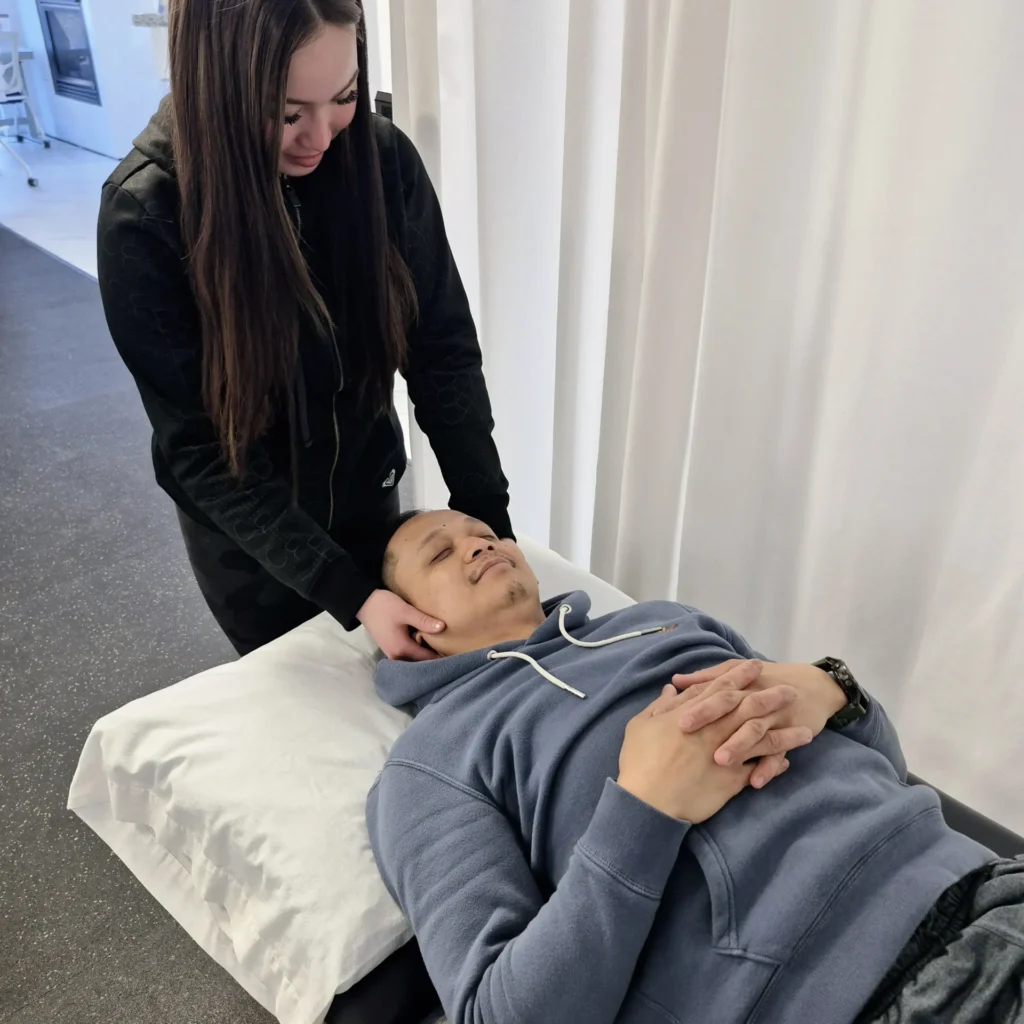
What our physios can do for you
Tired of feeling like your physio is going nowhere? If you’ve been doing the same basic exercises for months with no real progress, it’s not that physiotherapy doesn’t work – it’s that you need a more advanced, targeted approach. We provide the specialized, clinical expertise needed to get you past your plateau and back to your active life.
The result? Real progress. Less pain.
Pain Relief and Management
Experiencing chronic or persistent pain? Our physiotherapists help reduce pain, swelling, and inflammation
Rehabilitation after Injury or Surgery
We treat patients with acute injuries, sports-related-injuries, work-related (WCB) accidents, and motor vehicle (car) accidents.
Improved Mobility and Function
Feeling stiff or tired? We can help improve your range of motion or strength, including balance and fall prevention
Physio FAQs
What is physiotherapy and how does it help?
Physiotherapy helps restore movement, strength, and function when pain, injury, surgery, or medical conditions affect your body. Treatment may include hands‑on therapy, exercise rehabilitation, education, and movement retraining. Our goal is not just pain relief, but helping you return to daily activities, work, and sport safely and confidently.
Do I need physiotherapy or will this get better on its own?
Some minor aches may settle with time, but ongoing pain, recurring symptoms, stiffness, weakness, or reduced activity levels are reasons to seek physiotherapy. Early treatment often leads to faster recovery and helps prevent problems from becoming chronic. You do not need a physician referral to see a physiotherapist in Alberta for private care.
What causes my pain or stiffness?
Pain and stiffness can come from many sources, including:
- Muscle or tendon overload
- Joint irritation or arthritis
- Nerve sensitivity or compression
- Previous injuries that didn’t fully recover
- Repetitive work or sports demands
Physiotherapy focuses on identifying the cause of your symptoms—not just where the pain is felt.
Should I rest or keep moving if I’m in pain?
In most cases, guided movement is better than prolonged rest. Total rest can lead to stiffness, weakness, and slower recovery. Your physiotherapist will help you understand what movements are safe, what should be avoided temporarily, and how to progress activity without causing harm.
Will physiotherapy hurt or make things worse?
Physiotherapy should not cause injury. Some treatments or exercises may feel uncomfortable, especially early in recovery, but pain should remain manageable and short‑lived. If something causes sharp, worsening, or lingering pain, treatment is adjusted immediately. Your comfort and safety are always prioritized.
How long does physiotherapy take?
Recovery time depends on the condition and individual factors such as overall health, activity level, and adherence to exercises.
Typical timelines
- Minor strains or sprains: 2–6 weeks
- Persistent or recurring pain: several months, with gradual improvement
- Post‑surgical rehab: varies by procedure and tissue healing timelines
Your physiotherapist will discuss realistic expectations at your first visit.
Do I need an X‑ray or MRI before physiotherapy?
Not usually. Many musculoskeletal conditions improve with physiotherapy without imaging. If imaging is needed, your physiotherapist can advise and communicate with your physician. Scans often show age‑related or incidental findings that may not be the cause of your pain.
I can refer for xrays ultrasound nerve tests or specialists which most physios cannot. So maybe a line about how we can save them extra visits in some cases or communicate with their family doc.
What happens at my first physiotherapy appointment?
Your first appointment includes:
- A detailed discussion of your symptoms and goals
- A physical assessment of movement, strength, and function
- An initial treatment plan
- Education about your condition
- Exercises or strategies to start at home
Wear comfortable clothing that allows movement.
GET IN TOUCH
Book an Appointment
Came here for back pain and John, the physiotherapist here listened to my concerns and was very helpful in his treatment plans. I was referred to him through some colleagues and was not disappointed. He was able to provide some relief from my pain on the first visit and recommended some exercises and stretches I could do at home. He is very knowledgeable and expresses interest in expanding his scope of practice to include other treatments in the future. I will be coming back simply due to John and his excellent service.
Linley, via Google Reviews
What happens when you see a physiotherapist
Assessment
This determines the cause of the pain or problems presented.
An initial assessment will be done by a physiotherapist. This involves a detailed history taking, and then a physical test of Range of Motion, Strength, Flexibility, and a variety of other special tests (eg. reflexes, sensation, joint stability and ligament tests).
Personalized Treatment
Treatment always includes education about what is involved with your body
A treatment plan, including a diagnosis, goals for treatment, frequency of treatment, and prognosis, will be developed to determine the best treatment approach given the specific condition and your specific needs.
Treatment techniques
- Stretching (e.g. Assisted, hands-on, active, directed or guided, PNF, Contract-Relax, Hold-Relax, Sustained, Prolonged, Dynamic)
- Manual therapy (soft tissue techniques like massage, myofascial release, joint mobilization and/or spinal manipulation)
- Strengthening exercises
- Postural Work
- Stability exercises
- Mobility exercises
- Work specific tasks and conditioning
- Sport specific drills and conditioning
- Modalities (eg. heat packs, ice or cold therapy, therapeutic ultrasound, TENS, NMES, IFC, Laser, Traction, spinal decompression, or shockwave)
Physiotherapy also includes providing you with a home program of things to work on between physiotherapy sessions in the clinic.
Clinical Expertise
A–Z Guide to Physical Injuries and Conditions
Below is representative guide to the issues we treat daily. If your specific injury isn’t listed, our specialists are equipped to assess and treat a vast range of complex musculoskeletal conditions. To discuss, call us on 780.461.5245
General Conditions and Injuries
- Acute sports injuries
- Arthritis (hand, wrist, shoulder, knee, etc.)
- Baby’s head always tilted to one side (Torticollis)
- Balance
- Chronic & Complex Conditions
- Chronic pain conditions
- Clicking jaw (Temporomandibular Joint (TMJ) Disorder / Dysfunction (TMD)
- Dizziness after a cold/ear infection (Vestibular Neuritis or Labyrinthitis)
- Injuries that have plateaued in recovery
- Muscle strains
- Nerve compression or irritation
- Overuse injuries
- Performance-based rehab for athletes
- Post-surgical stiffness and weakness
- Recurrent or unresolved injuries
- Return-to-sport rehabilitation
- Return-to-work rehabilitation
- Room spinning (BPPV (Benign Paroxysmal Positional Vertigo))
- Sciatica, Shooting leg pain (Sciatic Nerve Compression / Radiculopathy)
- Sports & Activity-Related Injuries
- Stiff joints in the morning (Osteoarthritis)
- Tendinitis and tendinopathy
Lower Body Conditions, Injuries and Post-Surgical Recovery
- Acute sports injuries
- Arthritis
- Baby’s head always tilted to one side (Torticollis)
- Balance
- Chronic & Complex Conditions
- Chronic pain conditions
- Clicking jaw (Temporomandibular Joint (TMJ) Disorder / Dysfunction (TMD)
- Dizziness after a cold/ear infection (Vestibular Neuritis or Labyrinthitis)
- Injuries that have plateaued in recovery
- Muscle strains
- Nerve compression or irritation
- Overuse injuries
- Performance-based rehab for athletes
- Post-surgical stiffness and weakness
- Recurrent or unresolved injuries
- Return-to-sport rehabilitation
- Return-to-work rehabilitation
- Room spinning (BPPV (Benign Paroxysmal Positional Vertigo))
- Sciatica, Shooting leg pain (Sciatic Nerve Compression / Radiculopathy)
- Sports & Activity-Related Injuries
- Stiff joints in the morning (Osteoarthritis)
- Tendinitis and tendinopathy
Neck & Back Conditions and Injuries
- Ankylosing spondylitis
- Arthritis
- Central Stenosis Cervicogenic (headache)
- Cervicogenic headaches
- Costalchonditis
- Degenerative disc
- Disc prolapse
- Disc protrusion
- Dizziness BPPV
- Dowger’s
- Enthesopathy
- Hernia
- Hunch Back
- Kyphosis
- Lateral Stenosis
- Low back strain
- Lumbago
- Lumbar Disc
- Herniation
- Neck pain and stiffness
- Neuralgia Numbness and tingling going down leg
- Pain with lifting
- Pinched nerve
- Piriformis Syndrome
- Postural neck pain
- Rib displacement/subluxation
- Sacral iliac joint sprain
- Sacroiliitis
- Sciatic Nerve
- Sciatica
- SIJ
- Slipped disc
- Spondylithesis
- Spondylosis
- Sports Hernia
- Temporomandibular
- Thoracic Outlet Syndrome
- Threw out my back
- TMD
- TMJ dysfunction
- Torticollis
- Upper back pain
- Upper crossed syndrome
- WAD Disorder
- Whiplash injuries
- Work-related neck and shoulder strain
- Wry neck